
The moment a contract lands on your desk, your mind goes into overdrive. You skim through the pages, analyzing clauses, noting down action items, and watching out for errors that could prove costly. It’s a race against the clock to ensure compliance and accuracy before the contract gets approval and execution. The stakes are high, yet the process is tedious.
And that’s just one contract. Now, multiply that by hundreds processed each month across your organization. The complexity rises exponentially, and so do the chances of oversights. Without a defined workflow, contracts get lost in a sea of email threads and version edits. Important information slips through the cracks. Errors remain undetected. Deadlines whoosh by.
It’s every contract manager’s nightmare. Data shows that nearly 40% of companies have faced major issues due to inefficient contract management. The ramifications extend beyond immediate losses to strained business relationships and tarnished reputation.
But what if this painstaking process could be optimized? What if artificial intelligence could capture contracts as they come in, extract vital details, route them to the right people, and provide recommendations? The efficiency benefits are self-evident. Yet, the intelligent automation of contract approval workflows remains an elusive goal for most enterprises. We can say that Exploring Intelligent Contract Management Solutions in 2024 has become a must!
This is where AI-powered solutions like Kudra come into the picture. Let’s dissect the contract approval workflow, the challenges therein, and how Kudra helps create an optimized process.
Decoding the Stages of Contract Management
Before analyzing the solutions, it is vital to understand what exactly contract approval entails in contract management. In simple terms, it is the systematic process that governs how contract documents are drafted, reviewed, approved, and executed within an organization. It ensures agreements abide by company policies, legal requirements, and industry regulations.
The typical contract approval workflow comprises the following key stages:
• Initial Drafting: This begins when a new contract is required to formalize a business agreement. The contract manager creates an initial draft, incorporating standard company templates and clauses. Stakeholders like Sales, Finance, Legal, and relevant business units provide their inputs.
• Internal Reviews: Once the contract draft is ready, multiple departments perform intensive reviews based on their specialized knowledge. For instance, the Legal team vets the terminology for compliance and risk mitigation, while Finance analyzes pricing, payment terms, discounts, etc.
• Internal Approvals: After all queries are resolved, internal stakeholders formally approve the contract before it is sent to the external party. Approvers are chosen based on authority thresholds defined in the contract policy.
• External Negotiations: The pre-approved contract is then shared with the client or vendor for their consent. Further negotiations happen to align on agreeable terms and updates.
• Final Approval: Following external consensus, the contract goes through a final legal and financial review. Senior management provides the ultimate go-ahead for execution.
• Execution: Finally, the fully approved contract is signed by authorized company representatives and the external party.
At each stage, there are opportunities for process breakdowns – from repetitive data entry to missed deadlines to non-standardization. These inefficiencies exacerbate complex contracts spanning hundreds of pages with multiple negotiation loops.
And when exceptions arise, contract managers bear the maximum brunt. They end up spending countless hours compiling reports, responding to queries, and providing status updates to stakeholders.
Doing this manually can drain productivity and heighten risks in an accelerated business environment. It calls for intelligent automation to bolster the process.
The Challenges Slowing Down Contract Approvals
While contract approvals may seem straightforward on paper, most companies grapple with bottlenecks that decelerate the process of contract management and increase oversights.
Let’s analyze the primary pain points:
• Data Entry Dilemmas: Contracts contain a treasure trove of vital data – from customer names and addresses to pricing, SLAs, termination clauses, and more. Manually extracting such data across multiple contracts becomes an administrative nightmare. Teams end up spending hours rekeying information into various digital systems to generate reports. This heightens pressure on contract administrators and leaves room for human errors.
• Version Control Volatility: Negotiation loops mean there can be endless back-and-forth with file edits before contracts get approved. Without structured version control, different stakeholders access and amend contracts randomly leading to confusion. A lack of visibility into the most updated file or the editing history can cause costly oversight errors to slip through.
• Review Inefficiencies: Contracts have to align across diverse objectives – legal, financial, and operational. However, reviewing such cross-functional agreements is easier said than done at scale. Delays occur when contracts languish in siloed inboxes waiting for subject matter experts to provide their inputs. Critical details get missed without standardized cross-departmental assessments.
• Compliance Gaps: Non-compliant clauses that contradict company policies or industry regulations can heighten risks substantially if not addressed early. Yet, analyzing hundreds of pages with legal jargon is no cakewalk. Despite best efforts, compliance gaps may be identified in the final stages leading to execution delays or disputes.
• Reporting Restraints: To get visibility into the end-to-end process, senior management relies on contract administrators to compile reports and provide status updates. Since the data is manually extracted, it is seldom available in real-time. This impacts the ability to make data-driven business decisions or intervention actions proactively.
• Collaboration Inefficiencies: Finally, ineffective collaboration and communication issues delay consensus building both internally and externally leading to friction. The lack of a common platform for secure document sharing forces reliance on long email threads, hampering stakeholder alignment.
These bottlenecks amplify as contract volumes grow more complex. They end up hampering productivity, increasing costs and risks – making the process unsustainable. The solution lies in reimagining approvals with intelligent contract management automation.
Kudra’s AI-Powered Contract Management Capabilities
This is where Kudra, an AI-powered document processing and contract management solution, helps organizations optimize their contract approval workflows. Kudra adeptly digitizes, extracts, analyzes and routes mission-critical information from complex contracts to relevant stakeholders automatically.
Let’s examine Kudra’s specialized capabilities:
• Multi-format Document Processing: Kudra can ingest contracts in all formats – scanned copies, Word documents, PDFs, images, and emails – and seamlessly extract the embedded data using advanced OCR techniques. This alleviates manual rekeying needs while retaining data integrity.

• Customizable Data Extraction: Users can build tailored workflows with Kudra’s intuitive drag-and-drop interface to identify and capture relevant data fields from contracts. The custom fields can be mapped to internal databases and endpoints like Dropbox, Quickbooks, Google Sheets, Salesforce for seamless information sharing across the enterprise.

• In-depth Document Analysis: Beyond data extraction, Kudra dives deeper using its AI engine to analyze contract text, tables, footnotes, and signatures across pages. It accurately classifies contracts, sums up total values, spots critical entities, and uncovers risks – delivering actionable intelligence to reviewers.

• Recommendation Engine: Kudra goes one step further by providing clause-by-clause recommendations to aid compliance and risk mitigation based on its analysis. For instance, it can alert users of contradictory payment terms, and SLA gaps, or recommend adding specific indemnity clauses.
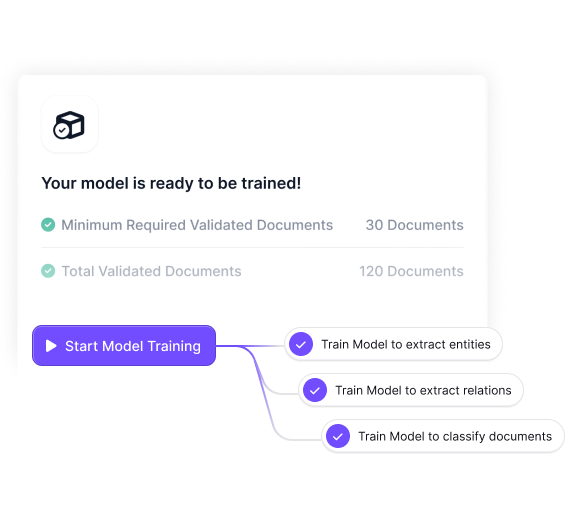
• Customizable AI Models: Kudra allows the creation of custom AI models tailored to analyze different aspects of complex contracts using just a few samples. Users can train models to accurately extract names, addresses, durations, and legal terminology, and even summarize contracts upon request.
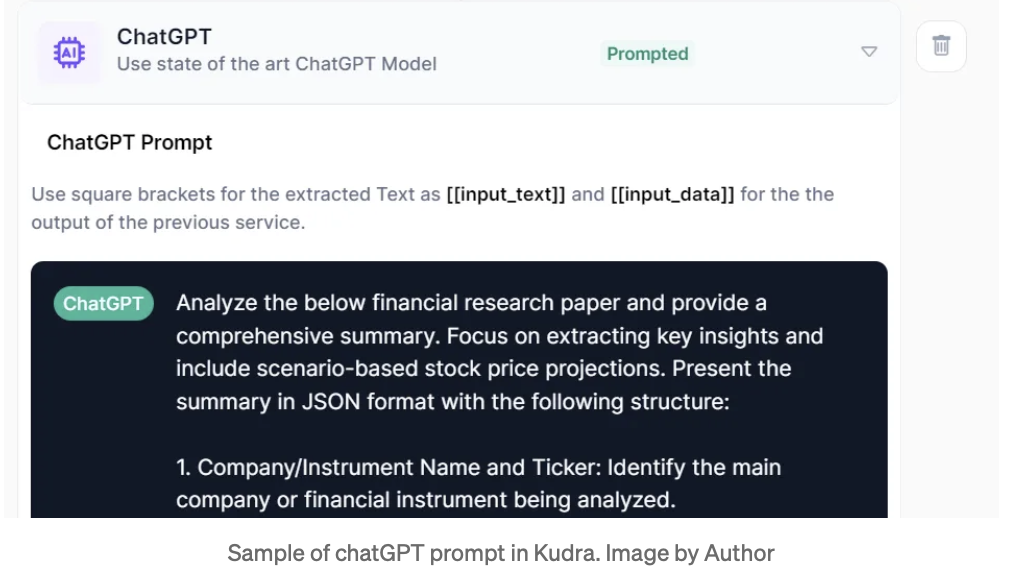
• Conversational Intelligence: Additionally, Kudra lets you tap into the problem-solving prowess of ChatGPT to ask for recommendations on specific contracts or clauses in plain English. The conversational AI reviews agreements and responds with detailed, legally sound advice saving hours of analysis.
With its versatile capabilities, Kudra aims to assist contract professionals by digitizing and simplifying high-value workflows. Next, let’s analyze how it can optimize the various stages of contract approvals.

Transforming Contract Management with Kudra
Kudra helps organizations reimagine contract approvals in four key ways:
• Structuring Workflows: Kudra enables the creation of structured contract management workflows aligned to company standards using easy drag-and-drop interfaces. Users can define review timelines, approval chains, and data flow maps tailored to different contract types for consistency.
For instance, SOW contracts can have shorter TATs, while high-value supplier contracts may need extensive legal analysis. Kudra automates routing based on pre-configured rules for efficiency.

• Extracting Intelligence: Instead of sifting through paperwork, Kudra captures and processes contracts as they are signed digitally to auto-populate relevant systems. Its AI engine extracts vital details along with actionable insights in real-time to aid downstream review and decision-making.
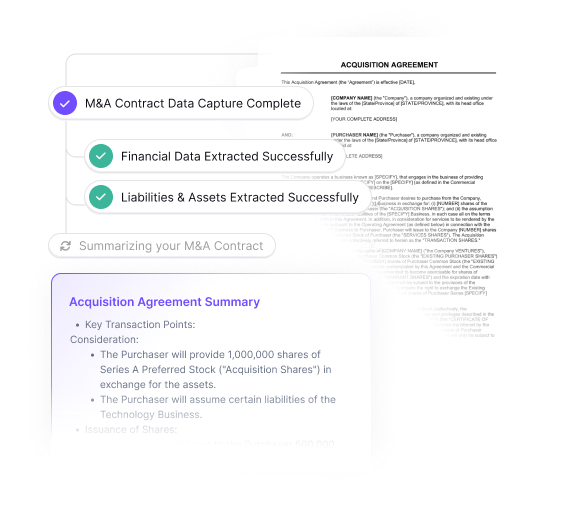
For example, Kudra can analyze a vendor contract to highlight the total spend value, discounts availed, payment frequencies, termination clauses, contractual risks and create a summary – even before it reaches the Finance team. This gives approvers information-advantage.

• Extracting Intelligence: Instead of sifting through paperwork, Kudra captures and processes contracts as they are signed digitally to auto-populate relevant systems. Its AI engine extracts vital details along with actionable insights in real time to aid downstream review and decision-making.
For example, Kudra can analyze a vendor contract to highlight the total spend value, discounts availed, payment frequencies, termination clauses, and contractual risks and create a summary – even before it reaches the Finance team. This gives approvers information advantage.
• Collaborating Securely: Kudra centralizes contract collaboration by creating a digital workspace for different stakeholders. Reviewers access the latest versions on a single platform and can annotate, raise queries, or provide verdicts inline without external communication.
Since actions are logged and documents are version-controlled, accountability improves. The workflow moves faster with transparent visibility removing approval bottlenecks.
• Generating Intelligence: Kudra’s AI capabilities go beyond contract digitization to actively generate intelligence for approvers. Its analytical models can accurately classify agreements, determine deviations, provide clause-specific inputs, and highlight risks early on.
Further, features like ChatGPT integration allow teams to get legally sound recommendations on demand through conversational interactions making reviews foolproof.
Together, Kudra’s structured workflows, data extraction prowess, collaboration functionalities, and AI abilities help optimize the end-to-end contract approval process. Let’s analyze the specific benefits.
The Tangible Impacts of an Optimized Contract Management
Implementing Kudra’s AI-powered contract management solution bears multifaceted benefits spanning accuracy, efficiency, compliance, costs, and collaboration. Here’s an in-depth perspective:
• Enhancing Efficiency: By automating manual tasks like data entry, routing, and reporting, Kudra alleviates the administrative burden on contract managers by 80-90%. This allows them to focus on value-adding analysis and stakeholder management proactively.
Approval turnaround times are shortened by over 35% as collaboration happens real time on a unified platform. Compliance risks also minimize with Kudra flagging them upfront through AI-based recommendations.
• Improving Accuracy: Kudra diminishes data errors arising from manual information transfer between systems. Automated extraction coupled with multi-stakeholder reviews on a single source of truth guarantees accuracy.
Its AI quality checks further minimize oversight risks by up to 60% through comprehensive analysis. The compliance recommendations also fill gaps proactively.
• Facilitating Compliance: By scrutinizing agreements against benchmarks, Kudra’s AI engine guarantees contractual compliance from day one. It also suggests additional clauses for fool-proofing, especially for high-risk contracts.
This prevents leaked revenue through inadvertent service failures or risks from non-standard legal terms down the line.
• Controlling Costs: The streamlined workflow leads to faster execution, ensuring contracts don’t languish for weeks before unlocking ROI. Reduced admin costs and higher productivity ultimately reflect in the bottom line.
Early risk flags further mitigate penalties and legal disputes saving millions. One legal oversight can cost companies between $31,000 – $1 million as per a study by the International Association for Contract and Commercial Management.
• Enabling Collaboration: By centralizing contract documentation, approvals, and tracking on a single platform, Kudra connects different stakeholders on the same page. This enhances enterprise-wide transparency, accountability, and consensus building.
The collective outcome is optimized contracts with minimized risks and leaks for the organization.
As evident, reimagining approvals with Kudra bears multidimensional benefits while future-proofing processes. The next pivotal step is training AI models for complex contract evaluation and analysis.
Building Custom AI Models for In-depth Contract Management & Analysis
While Kudra comes loaded with pre-built AI capabilities, users can further customize models to extract intricate data, evaluate clauses, or summarize complex legal terminology.
With just 10-20 labeled samples, Kudra can train highly accurate AI models using machine learning without intensive coding.
Let’s examine constructing specialized models for in-depth contract analysis:
• Data Field Identifier: Users can train a custom model to identify and extract specific data fields like addresses, names, dates, or IDs accurately across contracts. This comes in handy when dealing with thousands of agreements with region-specific elements like GDPR clauses.
• Clause Analyzer: For nuanced analysis like validating termination conditions or transfer of IP rights, custom models can review clauses and highlight potential risks or recommendations. Unlike rules-based searches, it understands semantics to uncover discrepancies.
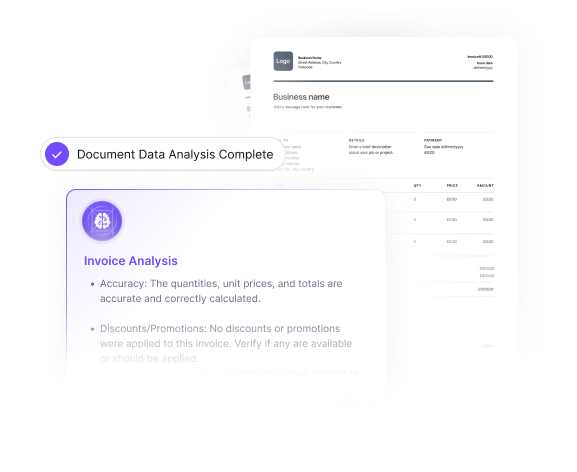
• Contract Classifier: Models can also auto-categorize contracts based on type – NDA, MSA, SOW, etc., or domain – marketing, technology, logistics, etc. This allows smart routing to relevant teams saving time.
• Text Summarizer: Summarization models are extremely effective for condensing key takeaways from voluminous agreements into concise, readable formats for executives.
• Comparison Engine: This allows identifying variances across two or more complex contracts quickly – whether its changed delivery timelines, payment terms, or SLAs. It picks out subtle differences that humans may miss.
The possibilities are immense when it comes to training AI models for contract management requirements. Kudra’s self-learning abilities ensure the models keep improving their accuracy with continuous usage over hundreds of agreements.
Conclusion
In conclusion, contract approvals form the foundational workflow enabling enterprises to formalize business relationships while balancing compliance, costs and risks. Yet, relying on manual reviews and archaic tools in the digital era is a recipe for disaster. It breeds inefficiency and heightens oversight risks leading to disputes and revenue leakage.
This calls for intelligent automation powered by AI. As discussed, Kudra revolutionizes contract approval workflows with its ability to digitize, analyze, collaborate, and provide recommendations autonomously. By parallelizing activities, resolving bottlenecks before they occur, filling gaps proactively, and enabling data-driven decisions, Kudra delivers over 35% efficiency gains, 60% risk reduction, and over 80% compliance assurance.
The outcome is thoroughly vetted contracts with minimized leaks and disputes through their lifecycle. This creates substantial value – both tangible and intangible.
So are you ready to step into the future of optimized contract approvals powered by AI? Schedule a demo of Kudra’s platform and take the first step towards increased efficiency, productivity, and risk mitigation through intelligent document processing. The power to shape your contract approval process for the digital-first world lies in your hands!


