The investment world faces an unprecedented explosion of alternative data sources. Social media sentiment flows in real-time, satellite imagery reveals supply chain disruptions before companies report them, and credit card transaction data provides instant insights into consumer behavior.
Add to this mix corporate filings, earnings transcripts, news feeds, and economic indicators, and investment professionals find themselves drowning in information rather than swimming in insights.
Traditional research methods simply cannot keep pace with this massive, unstructured data avalanche. Analysts armed with spreadsheets and basic statistical tools struggle to process the sheer volume, let alone extract meaningful patterns from text-heavy documents, images, or streaming social data.
The old approach of manually reviewing quarterly reports and conducting company interviews, while still valuable, leaves enormous blind spots in today's data-rich environment.
This is where artificial intelligence steps in as the solution to transform raw data into actionable investment intelligence. AI can process millions of social media posts to gauge market sentiment, analyze satellite images to predict commodity prices, and parse through thousands of regulatory filings in minutes rather than months.
Machine learning algorithms can identify patterns across multiple data sources simultaneously, creating a comprehensive view that human analysts simply cannot match.
As Forbes notes, "AI is no longer a futuristic concept but a present-day necessity for investment firms seeking to gain a competitive edge in an increasingly data-rich environment." The firms that master AI-powered data analysis today will define tomorrow's investment landscape.
AI-powered tools now automatically aggregate information from financial statements, news feeds, social media platforms, regulatory filings, and alternative data sources like satellite imagery or credit card transactions. These systems work around the clock, pulling relevant data points that would take human analysts weeks to compile manually.

The breadth of alternative data sources available to AI systems is remarkable. Traditional financial news from Bloomberg, Reuters, and CNBC provides foundational market information, while social media platforms like Twitter, LinkedIn, and Facebook offer real-time sentiment analysis.
Reddit discussions, particularly in investment-focused subreddits like r/investing and r/SecurityAnalysis, provide grassroots investor sentiment and emerging trend identification. Professional networks and forums capture industry insider perspectives, while specialized financial blogs and analyst reports add expert commentary layers.
Beyond text-based sources, AI systems process satellite imagery to track retail foot traffic, shipping activity, and agricultural yields. Credit card transaction data reveals consumer spending patterns across sectors, while mobile location data shows retail store visits and economic activity levels.
Web scraping technologies gather pricing information from e-commerce platforms, job posting trends from employment sites, and patent filings that signal innovation activity. Even unconventional sources like weather data, Google search trends, and app download statistics contribute valuable insights when properly analyzed.
The real magic happens when AI applies natural language processing to understand what this data actually means. Sentiment analysis algorithms scan through thousands of news articles, earnings call transcripts, and social media posts to gauge market mood around specific companies or sectors.
Entity recognition technology identifies key players, relationships, and events that might impact investment decisions, connecting dots that human researchers might miss.
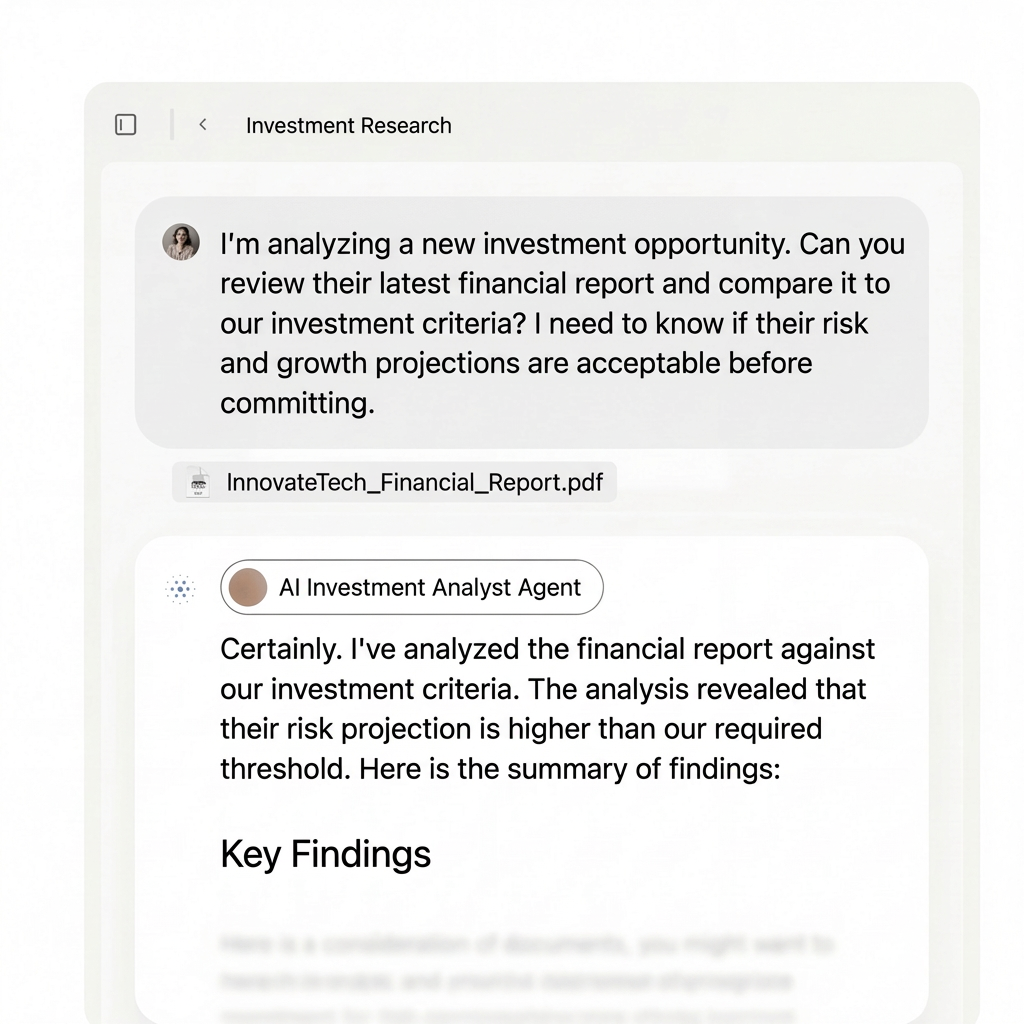
Take data enrichment platforms that automatically extract information from unstructured public filings and transform them into clean, analyzable datasets. These systems can cross-reference financial performance with supply chain disruptions, regulatory changes, or competitive developments.
For instance, an AI system might automatically flag when a company's key supplier faces production issues, potentially affecting the company's future earnings before this information becomes widely known.
This automated approach means investment teams can focus their time on analysis and strategy rather than data hunting. The AI handles the heavy lifting of data collection and initial processing, delivering enriched datasets that provide a more complete picture of investment opportunities and risks.
The Kudra.ai platform excels at collecting alternative data from multiple sources simultaneously. Investment professionals can configure the system to monitor specific companies, sectors, or market themes across various data streams.
The platform automatically gathers information from social media sentiment, news articles, regulatory filings, patent databases, job postings, and even satellite imagery when relevant to investment decisions.
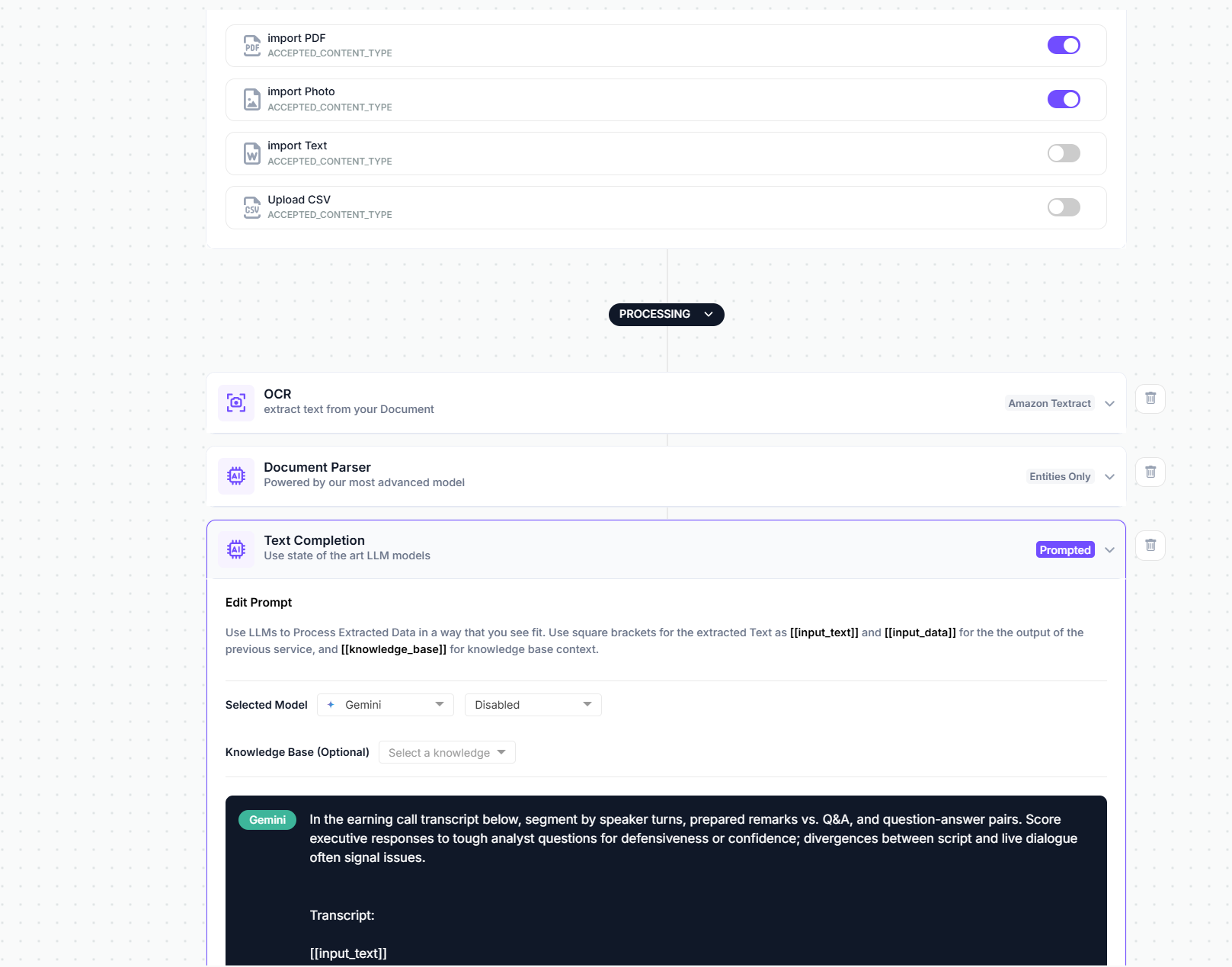
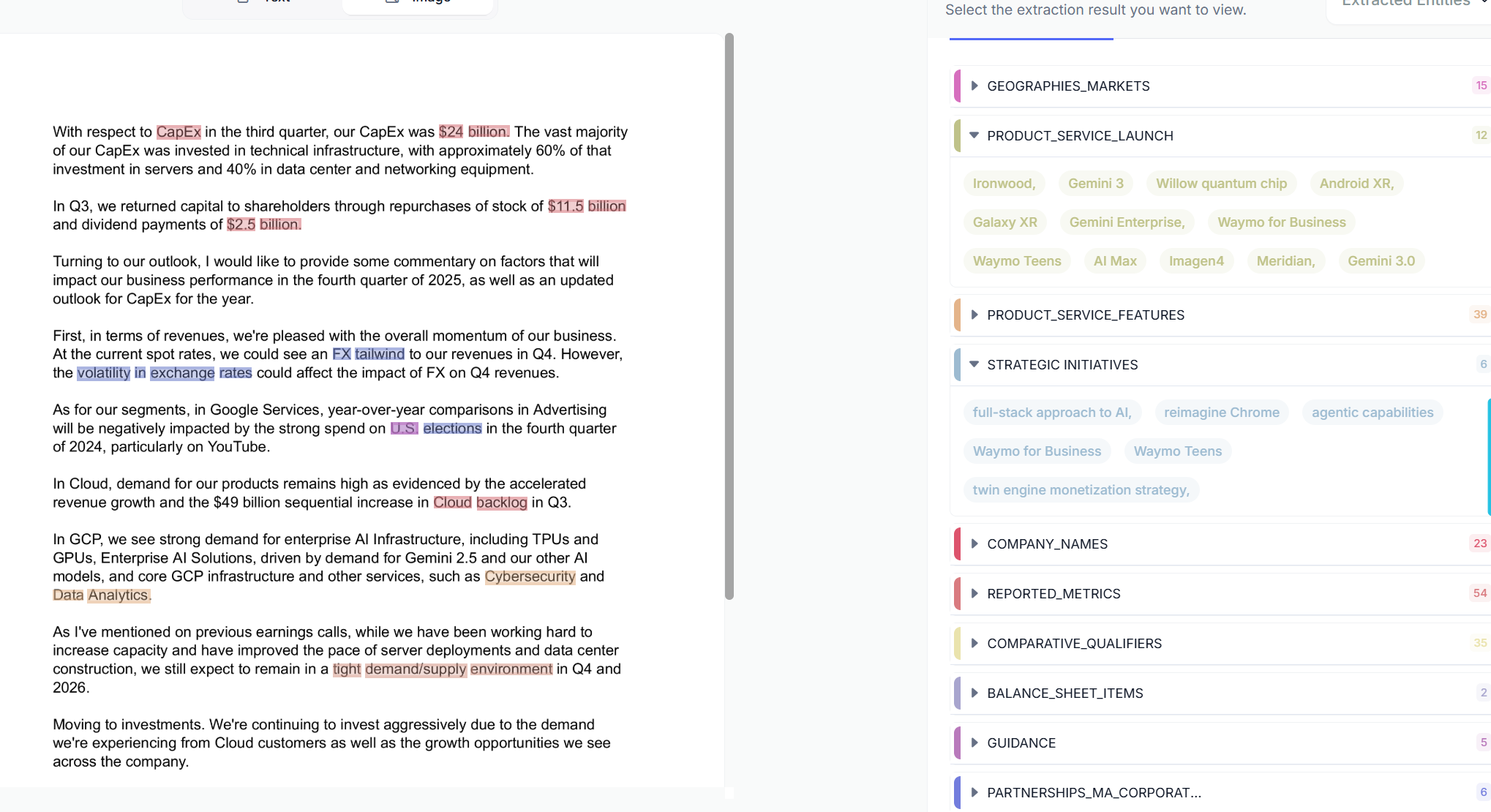
What sets Kudra.ai apart is its intelligent data enrichment capabilities. Rather than simply collecting raw information, the platform applies natural language processing and machine learning algorithms to extract meaningful insights from unstructured data sources.
For example, when analyzing earnings call transcripts, Kudra.ai can identify subtle changes in management tone, flag new strategic initiatives, and detect potential risk factors that might not be immediately obvious to human analysts.
The platform's real-time monitoring capabilities ensure investment teams never miss critical developments. Kudra.ai continuously scans configured data sources and sends instant alerts when significant events occur.
This might include sudden spikes in social media mentions, regulatory filing submissions, or changes in satellite-detected activity at key facilities. These timely notifications enable investment professionals to respond quickly to market-moving information.
Integration with existing investment workflows is seamless through Kudra.ai's API and dashboard interfaces. Investment teams can export cleaned, structured datasets directly into their preferred analysis tools, or access insights through the platform's intuitive visualization interface.
This eliminates the traditional bottleneck of manually processing alternative data sources, allowing analysts to focus on interpretation and strategy rather than data collection and cleaning.
The platform also addresses data quality concerns that often plague alternative data initiatives. Kudra.ai employs sophisticated validation algorithms to verify information accuracy, remove duplicates, and standardize data formats across different sources.
This ensures that investment decisions are based on reliable, high-quality information rather than potentially misleading or incomplete datasets.
As Deloitte notes, successful AI implementation requires "AI-ready data—accurate, timely, broad, and securely governed," with AI itself employed for "monitoring, repairing, and enriching data at scale, such as anomaly detection and auto-generating lineage graphs."
Beyond cleaning data, AI identifies patterns and predicts future trends that inform investment decisions. Machine learning models analyze vast datasets to uncover relationships humans might miss, enabling proactive rather than reactive investment strategies.
McKinsey emphasizes that AI can "automate and augment human judgment for better outcomes, personalizing offers, strengthening customer acquisition, increasing lifetime value, lowering operating costs, and reducing credit risk."
Real-world applications demonstrate this capability. Kudra.ai transforms unstructured public filings into clean, standardized data that investment analysts can readily use. Meanwhile, companies analyze transaction patterns to predict consumer behavior—processing millions of credit card purchases, online transactions, and mobile payments to forecast spending trends across different sectors.
This combination of data cleaning and predictive analytics creates a foundation for more accurate investment research. Clean, standardized financial statements ensure reliable comparisons between companies, while AI-powered pattern recognition in transaction data reveals emerging consumer preferences that can signal investment opportunities before they become obvious to the broader market.
These intelligent platforms continuously scan vast data streams, instantly flagging significant market movements, earnings surprises, or regulatory changes that could impact portfolios. Rather than waiting for manual reports or periodic updates, investment teams receive real-time notifications that enable immediate strategic responses.
One of AI's most valuable capabilities lies in converting messy, unstructured information into clean, analyzable data. Generative AI excels at processing alternative data sources that were previously difficult to incorporate into investment models.
For example, companies like Fiscal.ai use AI to transform complex public filings into structured datasets that analysts can immediately use. Natural language processing algorithms extract sentiment from social media posts, parse satellite imagery for economic indicators, and convert earnings call transcripts into quantifiable insights.
Data quality remains paramount in investment decisions, where inaccurate information can lead to significant losses. AI-driven cleaning and validation systems automatically detect anomalies, identify inconsistencies across data sources, and flag potential errors before they reach analysts.
These systems employ sophisticated algorithms to monitor data lineage, ensuring that information remains accurate as it flows through various processing stages. By continuously validating and enriching incoming data streams, AI helps investment firms maintain the high-quality, reliable datasets necessary for confident decision-making in volatile markets.
The technology excels at identifying patterns in alternative data sources, conducting real-time sentiment analysis, and generating actionable insights that would be impossible to achieve through traditional methods alone.
Investment firms that embrace AI-driven approaches position themselves to maintain competitive advantages in an increasingly data-rich market. The technology enables portfolio managers and analysts to process information faster, identify opportunities earlier, and make more informed decisions based on comprehensive data analysis.
As markets become more complex and data sources multiply, AI becomes not just helpful but necessary for staying ahead.
The numbers speak for themselves: a recent study found that firms using AI-powered data analysis experienced a 15-20% increase in alpha generation compared to those relying on traditional methods, according to McKinsey's report on AI in asset management.
This performance improvement reflects AI's ability to uncover hidden correlations, process alternative data sources, and identify market inefficiencies that human analysts might miss.
The evolution toward "agentic AI" promises even greater automation and proactive analysis capabilities. Investment research is entering an era where AI systems will not just respond to queries but actively monitor markets, identify emerging trends, and alert researchers to potential opportunities before they become obvious to competitors.
Data quality stands as the primary obstacle. Investment firms need "AI-ready data—accurate, timely, broad, and securely governed" to make sound decisions.
Many organizations struggle with fragmented data assets and legacy systems that cannot provide "governed, secure, and timely access to internal and external data for millions of customers in near real-time, at the 'point of decision.'"
Processing unstructured data presents another major hurdle. Investment research relies heavily on news articles, earnings calls, regulatory filings, and social media sentiment—all requiring sophisticated natural language processing capabilities.
The "black box" problem creates trust issues. When AI models make investment recommendations, explaining the reasoning behind these decisions becomes complex, especially with non-parametric machine learning models. This lack of transparency can hinder adoption among investment professionals who need to understand their decision-making process.
How much does it cost to implement AI in investment research?
Implementation costs vary widely based on approach and scale. Major expense categories include building AI-grade data infrastructure, hiring specialized talent like data scientists and AI engineers, acquiring technology platforms, and integrating systems with existing workflows.
Organizations face a "build versus buy" decision. Some choose to purchase foundation models while "building custom layers with proprietary data for differentiation," which can reduce initial costs but requires ongoing development investment.
What skills are needed to work with AI in investment research?
Teams need data scientists proficient in machine learning algorithms, data engineers capable of building robust data pipelines, and investment professionals with deep domain expertise.
Additional requirements include data governance specialists, cloud computing knowledge for deployment, and natural language processing skills for analyzing textual financial data.
Human oversight remains indispensable, combining "AI's power with human business expertise" to ensure sound investment decisions.
Add to this mix corporate filings, earnings transcripts, news feeds, and economic indicators, and investment professionals find themselves drowning in information rather than swimming in insights.
Traditional research methods simply cannot keep pace with this massive, unstructured data avalanche. Analysts armed with spreadsheets and basic statistical tools struggle to process the sheer volume, let alone extract meaningful patterns from text-heavy documents, images, or streaming social data.
The old approach of manually reviewing quarterly reports and conducting company interviews, while still valuable, leaves enormous blind spots in today's data-rich environment.
This is where artificial intelligence steps in as the solution to transform raw data into actionable investment intelligence. AI can process millions of social media posts to gauge market sentiment, analyze satellite images to predict commodity prices, and parse through thousands of regulatory filings in minutes rather than months.
Machine learning algorithms can identify patterns across multiple data sources simultaneously, creating a comprehensive view that human analysts simply cannot match.
As Forbes notes, "AI is no longer a futuristic concept but a present-day necessity for investment firms seeking to gain a competitive edge in an increasingly data-rich environment." The firms that master AI-powered data analysis today will define tomorrow's investment landscape.
5 Ways AI-Powered Data Improves Investment Research
Automated Data Collection & Intelligent Enrichment
Modern investment research faces an overwhelming challenge: extracting meaningful insights from countless data sources scattered across the financial landscape.AI-powered tools now automatically aggregate information from financial statements, news feeds, social media platforms, regulatory filings, and alternative data sources like satellite imagery or credit card transactions. These systems work around the clock, pulling relevant data points that would take human analysts weeks to compile manually.
The breadth of alternative data sources available to AI systems is remarkable. Traditional financial news from Bloomberg, Reuters, and CNBC provides foundational market information, while social media platforms like Twitter, LinkedIn, and Facebook offer real-time sentiment analysis.
Reddit discussions, particularly in investment-focused subreddits like r/investing and r/SecurityAnalysis, provide grassroots investor sentiment and emerging trend identification. Professional networks and forums capture industry insider perspectives, while specialized financial blogs and analyst reports add expert commentary layers.
Beyond text-based sources, AI systems process satellite imagery to track retail foot traffic, shipping activity, and agricultural yields. Credit card transaction data reveals consumer spending patterns across sectors, while mobile location data shows retail store visits and economic activity levels.
Web scraping technologies gather pricing information from e-commerce platforms, job posting trends from employment sites, and patent filings that signal innovation activity. Even unconventional sources like weather data, Google search trends, and app download statistics contribute valuable insights when properly analyzed.
The real magic happens when AI applies natural language processing to understand what this data actually means. Sentiment analysis algorithms scan through thousands of news articles, earnings call transcripts, and social media posts to gauge market mood around specific companies or sectors.
Entity recognition technology identifies key players, relationships, and events that might impact investment decisions, connecting dots that human researchers might miss.
Take data enrichment platforms that automatically extract information from unstructured public filings and transform them into clean, analyzable datasets. These systems can cross-reference financial performance with supply chain disruptions, regulatory changes, or competitive developments.
For instance, an AI system might automatically flag when a company's key supplier faces production issues, potentially affecting the company's future earnings before this information becomes widely known.
This automated approach means investment teams can focus their time on analysis and strategy rather than data hunting. The AI handles the heavy lifting of data collection and initial processing, delivering enriched datasets that provide a more complete picture of investment opportunities and risks.
How to Collect Alternative Data with Kudra.ai
Kudra.ai represents a new generation of AI-powered platforms specifically designed to streamline alternative data collection for investment research. The platform addresses one of the most significant challenges facing modern investment firms: efficiently gathering and processing diverse data sources that traditional financial databases cannot capture.The Kudra.ai platform excels at collecting alternative data from multiple sources simultaneously. Investment professionals can configure the system to monitor specific companies, sectors, or market themes across various data streams.
The platform automatically gathers information from social media sentiment, news articles, regulatory filings, patent databases, job postings, and even satellite imagery when relevant to investment decisions.
What sets Kudra.ai apart is its intelligent data enrichment capabilities. Rather than simply collecting raw information, the platform applies natural language processing and machine learning algorithms to extract meaningful insights from unstructured data sources.
For example, when analyzing earnings call transcripts, Kudra.ai can identify subtle changes in management tone, flag new strategic initiatives, and detect potential risk factors that might not be immediately obvious to human analysts.
The platform's real-time monitoring capabilities ensure investment teams never miss critical developments. Kudra.ai continuously scans configured data sources and sends instant alerts when significant events occur.
This might include sudden spikes in social media mentions, regulatory filing submissions, or changes in satellite-detected activity at key facilities. These timely notifications enable investment professionals to respond quickly to market-moving information.
Integration with existing investment workflows is seamless through Kudra.ai's API and dashboard interfaces. Investment teams can export cleaned, structured datasets directly into their preferred analysis tools, or access insights through the platform's intuitive visualization interface.
This eliminates the traditional bottleneck of manually processing alternative data sources, allowing analysts to focus on interpretation and strategy rather than data collection and cleaning.
The platform also addresses data quality concerns that often plague alternative data initiatives. Kudra.ai employs sophisticated validation algorithms to verify information accuracy, remove duplicates, and standardize data formats across different sources.
This ensures that investment decisions are based on reliable, high-quality information rather than potentially misleading or incomplete datasets.
Streamlined Data Cleaning & Predictive Analytics
AI algorithms excel at detecting and correcting errors in financial data, ensuring the integrity that investment research demands. These systems automatically identify anomalies, standardize inconsistent formats, and repair data quality issues at scale.As Deloitte notes, successful AI implementation requires "AI-ready data—accurate, timely, broad, and securely governed," with AI itself employed for "monitoring, repairing, and enriching data at scale, such as anomaly detection and auto-generating lineage graphs."
Beyond cleaning data, AI identifies patterns and predicts future trends that inform investment decisions. Machine learning models analyze vast datasets to uncover relationships humans might miss, enabling proactive rather than reactive investment strategies.
McKinsey emphasizes that AI can "automate and augment human judgment for better outcomes, personalizing offers, strengthening customer acquisition, increasing lifetime value, lowering operating costs, and reducing credit risk."
Real-world applications demonstrate this capability. Kudra.ai transforms unstructured public filings into clean, standardized data that investment analysts can readily use. Meanwhile, companies analyze transaction patterns to predict consumer behavior—processing millions of credit card purchases, online transactions, and mobile payments to forecast spending trends across different sectors.
This combination of data cleaning and predictive analytics creates a foundation for more accurate investment research. Clean, standardized financial statements ensure reliable comparisons between companies, while AI-powered pattern recognition in transaction data reveals emerging consumer preferences that can signal investment opportunities before they become obvious to the broader market.
Timely Insights & Addressing Key Challenges
Modern investment research demands speed and accuracy that traditional data processing simply cannot deliver. AI-powered dashboards and alert systems transform how investment professionals monitor markets and make decisions.These intelligent platforms continuously scan vast data streams, instantly flagging significant market movements, earnings surprises, or regulatory changes that could impact portfolios. Rather than waiting for manual reports or periodic updates, investment teams receive real-time notifications that enable immediate strategic responses.
One of AI's most valuable capabilities lies in converting messy, unstructured information into clean, analyzable data. Generative AI excels at processing alternative data sources that were previously difficult to incorporate into investment models.
For example, companies like Fiscal.ai use AI to transform complex public filings into structured datasets that analysts can immediately use. Natural language processing algorithms extract sentiment from social media posts, parse satellite imagery for economic indicators, and convert earnings call transcripts into quantifiable insights.
Data quality remains paramount in investment decisions, where inaccurate information can lead to significant losses. AI-driven cleaning and validation systems automatically detect anomalies, identify inconsistencies across data sources, and flag potential errors before they reach analysts.
These systems employ sophisticated algorithms to monitor data lineage, ensuring that information remains accurate as it flows through various processing stages. By continuously validating and enriching incoming data streams, AI helps investment firms maintain the high-quality, reliable datasets necessary for confident decision-making in volatile markets.
Conclusion & FAQ
Artificial intelligence has fundamentally transformed how investment professionals approach research, data analysis, and decision-making. From processing vast amounts of unstructured data to automating complex analytical workflows, AI has proven its ability to enhance every aspect of the investment research process.The technology excels at identifying patterns in alternative data sources, conducting real-time sentiment analysis, and generating actionable insights that would be impossible to achieve through traditional methods alone.
Investment firms that embrace AI-driven approaches position themselves to maintain competitive advantages in an increasingly data-rich market. The technology enables portfolio managers and analysts to process information faster, identify opportunities earlier, and make more informed decisions based on comprehensive data analysis.
As markets become more complex and data sources multiply, AI becomes not just helpful but necessary for staying ahead.
The numbers speak for themselves: a recent study found that firms using AI-powered data analysis experienced a 15-20% increase in alpha generation compared to those relying on traditional methods, according to McKinsey's report on AI in asset management.
This performance improvement reflects AI's ability to uncover hidden correlations, process alternative data sources, and identify market inefficiencies that human analysts might miss.
The evolution toward "agentic AI" promises even greater automation and proactive analysis capabilities. Investment research is entering an era where AI systems will not just respond to queries but actively monitor markets, identify emerging trends, and alert researchers to potential opportunities before they become obvious to competitors.
FAQ: Frequently Asked Questions About AI in Investment Research
What are the biggest challenges of using AI in investment research?Data quality stands as the primary obstacle. Investment firms need "AI-ready data—accurate, timely, broad, and securely governed" to make sound decisions.
Many organizations struggle with fragmented data assets and legacy systems that cannot provide "governed, secure, and timely access to internal and external data for millions of customers in near real-time, at the 'point of decision.'"
Processing unstructured data presents another major hurdle. Investment research relies heavily on news articles, earnings calls, regulatory filings, and social media sentiment—all requiring sophisticated natural language processing capabilities.
The "black box" problem creates trust issues. When AI models make investment recommendations, explaining the reasoning behind these decisions becomes complex, especially with non-parametric machine learning models. This lack of transparency can hinder adoption among investment professionals who need to understand their decision-making process.
How much does it cost to implement AI in investment research?
Implementation costs vary widely based on approach and scale. Major expense categories include building AI-grade data infrastructure, hiring specialized talent like data scientists and AI engineers, acquiring technology platforms, and integrating systems with existing workflows.
Organizations face a "build versus buy" decision. Some choose to purchase foundation models while "building custom layers with proprietary data for differentiation," which can reduce initial costs but requires ongoing development investment.
What skills are needed to work with AI in investment research?
Teams need data scientists proficient in machine learning algorithms, data engineers capable of building robust data pipelines, and investment professionals with deep domain expertise.
Additional requirements include data governance specialists, cloud computing knowledge for deployment, and natural language processing skills for analyzing textual financial data.
Human oversight remains indispensable, combining "AI's power with human business expertise" to ensure sound investment decisions.


